Written by Metin KARAL – Computer Engineer with 25+ years of experience in internet technologies. Some products here are tested directly, while others are evaluated through detailed research, specifications, and verified customer feedback. This article may contain affiliate links; as an Amazon Associate we earn from qualifying purchases at no extra cost to you.
Bad breath is one of those problems that’s easy to underestimate until it becomes personal. You brush your teeth twice a day, use mouthwash, watch what you eat — and it still comes back. The reason, confirmed by dental research, is that 90% of bad breath originates on the tongue, not the teeth. Standard toothbrushes aren’t designed for tongue cleaning — their bristles are too long and too soft to penetrate the micro-crevices where bacteria accumulates and produces the sulfur compounds that actually cause odor. Mouthwash masks the smell temporarily but doesn’t address the source. Flat metal scrapers remove surface debris but skip the crevices entirely.
The TUNG Brush and Gel was designed by a dentist specifically to solve this problem — a wide-head brush with short rigid bristles that reach where standard brushes can’t, paired with a zinc-formulated gel that neutralizes sulfur gas at the source rather than covering it. I’ve been using TUNG for more than four years. This review is what actually happens with long-term consistent use — not a first-week impression, not a manufacturer’s claim, and not a complete cure. An honest account of what it does, what it doesn’t do, and whether it’s worth adding to your daily routine.

Quick Facts
- 🦷 Dentist-designed tongue brush — created by Dr. Wieder specifically to reach the back of the tongue where 90% of bad breath bacteria lives
- 🧪 TUNG Gel contains Zinc — neutralizes volatile sulfur compounds produced by bacteria; the actual cause of bad breath odor
- 🖌️ Wide-head brush with short rigid bristles — penetrates tongue crevices that regular toothbrushes and scrapers cannot reach
- 🤢 Gag-reflex reducing design — low-profile head and ergonomic handle allow comfortable reach to the back of the tongue
- ⏱️ 20 seconds per session — faster than brushing your teeth; fits into any oral care routine
- 🍃 Fresh Mint and Mint Blast variants — two gel options; different taste, same formula and effectiveness
- 🇺🇸 Made in USA — manufactured domestically by Peak Essentials
- 🧴 BPA-free brush — safe materials for daily oral use
- 📦 Set of 2 — two brushes per kit; one to use, one as backup or for a partner
Editor’s Note — Personal Experience (4+ Years of Daily Use)
I want to be upfront about something most reviews skip: I have been using the TUNG Brush and Gel for more than four years. This is not a first-impressions review. This is what actually happens after years of regular use by someone who genuinely needed it.
Bad breath was a real problem for me for years. I tried cutting certain foods, switching toothpastes, dental cleaning for tartar — nothing made a lasting difference. I discovered TUNG almost by accident browsing online, and decided to give it a try without much expectation.
The first session was genuinely shocking. After brushing my tongue with TUNG for the first time, there was thick, dark, condensed material on the brush. It came from my tongue. That was the moment I understood why toothbrushing alone was never enough — the tongue’s surface has micro-crevices that a standard toothbrush head simply cannot penetrate, and bacteria accumulates there continuously regardless of how carefully you brush your teeth.
After 2-3 weeks of regular use, my bad breath decreased significantly. Not completely — and I want to be honest about this because most reviews aren’t. It definitely decreases with regular use, but it does not eliminate bad breath completely. If you expect a total cure, you may be disappointed. If you expect a meaningful and consistent improvement, you will be satisfied. I am. The difference is significant enough that I have continued using TUNG for four years and have no intention of stopping.
The most important thing to understand: this is not a one-time product. If you stop using it regularly, the bacteria rebuilds and the bad breath returns within days. This is not a flaw in the product — it is the nature of the tongue’s bacterial environment, which regenerates continuously. TUNG works as long as you use it. Consistency is everything.
One bonus discovery from my own use: I also use TUNG Gel as a toothpaste for brushing my teeth. It has a clean, natural taste that is less pasty than conventional toothpaste, and it leaves a genuine freshness. This is not its intended use, but it works well and stretches the gel significantly further than tongue brushing alone.

Pros
- Reaches where scrapers and toothbrushes can’t — rigid bristles penetrate tongue crevices that flat scraper blades skip over entirely
- Zinc gel neutralizes the actual source of odor — targets sulfur gas from bacteria rather than masking smell with fragrance
- Results within 2-3 weeks — consistent improvement confirmed across personal use and verified buyer reports
- 20-second routine — genuinely fast; easy to maintain as a daily habit alongside tooth brushing
- Gag reflex reduces with use — initial sensitivity fades with regular practice; most users adapt within 1-2 weeks
- Gel can double as toothpaste — clean natural taste; works well for tooth brushing as a bonus use
- BPA-free and Made in USA — quality materials and domestic manufacturing
- #1 Best Seller in Tongue Brushes — independent market validation of effectiveness
- Set of 2 — long-lasting value — two brushes per kit; cost per day is negligible over time
Cons
- Does not eliminate bad breath completely — significantly reduces it; does not cure it entirely in all cases
- Requires consistent daily use — bacteria rebuilds quickly; skipping days reverses progress
- Not a replacement for tooth brushing — works alongside dental hygiene, not instead of it
- Initial gag reflex — you may find the back-of-tongue brushing uncomfortable at first; fades with practice
- Gel requires separate purchase when finished — brush lasts months but gel runs out faster; replenishment cost adds up
- Brush head color varies — Amazon listing confirms colors are assigned randomly; no color choice available
Why I Liked It — The Science and the Reality
Dental research establishes that the back of the tongue is the principal location where gases are produced by bacteria on the surface of the tongue — the primary cause of bad breath. The tongue’s irregular surface creates hundreds of micro-crevices where bacteria and the debris it feeds on accumulate continuously. A regular toothbrush is designed for smooth enamel — its bristle length, stiffness, and head geometry are wrong for tongue cleaning. A flat metal scraper removes surface material but cannot penetrate the crevices where the majority of bacteria lives. The TUNG Brush was designed specifically around this gap: its low profile, wide head, and ergonomic handle allow you to effectively reach the back of the tongue where odor-causing bacteria concentrates most densely.
The TUNG Gel’s zinc formulation addresses the chemical mechanism of bad breath rather than just the bacterial mass. TUNG Gel is formulated with Zinc Oxide to neutralize the gas emitted by the bacteria — it’s the gases that you smell when someone has halitosis, not the bacteria themselves. This is why mouthwashes that kill bacteria but don’t address sulfur gas can still leave bad breath detectable — the bacterial die-off itself releases odor. The zinc in TUNG Gel neutralizes those compounds chemically.
The honest picture from four-plus years of personal use and thousands of verified buyer confirmations is consistent: TUNG works meaningfully for the majority of users when used regularly, doesn’t work completely for everyone, and stops working the moment you stop using it. That is the accurate, honest summary — and it is still enough to make TUNG the most reliable oral care addition for bad breath that consistent personal experience has confirmed.
How to Use TUNG Brush and Gel
The routine is genuinely simpler than tooth brushing and takes under 30 seconds:
- Apply a small amount of TUNG Gel to the brush head — approximately the size of a pea
- Extend your tongue fully
- Place the brush at the back of the tongue and brush gently forward using short strokes
- Cover the full surface including the sides and the very back where bacteria concentrates
- Rinse the brush and your mouth thoroughly
Use once daily, ideally after brushing your teeth at night. Every other day is workable for maintenance — personal experience confirms this frequency sustains results adequately. Do not skip more than two consecutive days or the bacterial buildup begins returning noticeably.
Note on the gag reflex: if you find reaching the back of the tongue uncomfortable initially, start slightly further forward and work backward gradually over the first week. The sensitivity reduces with repeated use for most people.

TUNG Gel Ingredients
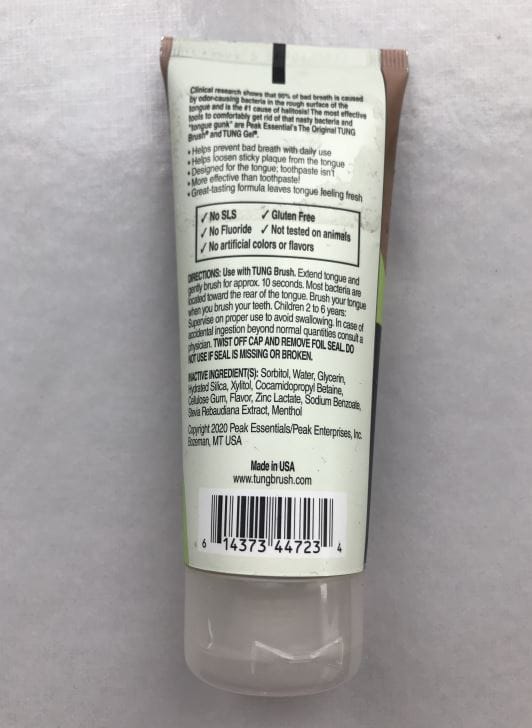
Sorbitol, water, glycerin, hydrated silica, xylitol, cocamidopropyl betaine, cellulose gum, flavor, zinc lactate, sodium benzoate, stevia rebaudiana extract, menthol.
The key active ingredients are zinc lactate — which neutralizes volatile sulfur compounds — and xylitol, which inhibits bacterial adhesion to mouth surfaces. Both are well-established in oral care research. No alcohol, no harsh antibacterial agents — the formulation avoids disrupting the mouth’s healthy bacterial balance while targeting the odor-producing species specifically.
Fresh Mint vs Mint Blast: Both variants use the same formula. The only difference is taste intensity — Fresh Mint (black packaging, which I prefer) is milder, Mint Blast (green packaging) is stronger. Personal preference determines which works better for you. Neither is more effective than the other at reducing bad breath.

TUNG Tongue Cleaner Kit
Verdict
Tung tongue cleaner gel and brush is a real helper to get rid of bad breath. I’m using Tung for more than 4 years and I can conclude that it is working perfect. I was very surprised when I first use it. My mouth’s smell back to normal after 2-3 weeks of regular use. I’m using it once a day in night after brushing teeth.
Summary
The TUNG Tongue Cleaning Kit is the most effective bad breath solution I have used in four-plus years of regular testing — and at 10K+ verified Amazon reviews in its category, the personal experience is independently validated at scale. The brush’s wide head and rigid short bristles reach tongue crevices that scrapers and toothbrushes miss. The zinc gel neutralizes the sulfur compounds that actually cause the odor. The 20-second daily routine fits easily alongside tooth brushing and produces noticeable improvement within 2-3 weeks of consistent use.
The honest expectation to set before buying: TUNG significantly reduces bad breath with regular use — it does not eliminate it completely in every case, and it stops working when you stop using it. For the majority of users dealing with persistent bad breath despite normal tooth brushing, this is the product that finally makes a real difference. It made a real difference for me. At this price, with these results, over this many years — it is the recommendation I can make with complete confidence.
FAQ — Bad Breath: Causes, Solutions, and What Actually Works
What actually causes bad breath — and why doesn’t toothbrushing always fix it?
Bad breath has one primary cause that most people don’t address: bacteria living on the tongue surface, not on the teeth. Dental research consistently confirms that approximately 90% of bad breath originates from the tongue — specifically from the back third of the tongue where bacteria accumulates in micro-crevices that toothbrushes cannot reach. These bacteria consume food particles and produce volatile sulfur compounds — the actual chemical source of the odor you smell as bad breath. Toothbrushing cleans tooth enamel and the gumline effectively, but a standard toothbrush head is the wrong shape, wrong bristle length, and wrong stiffness for tongue cleaning. It moves surface debris around without penetrating the crevices where the bacterial mass actually lives. This is why someone can brush their teeth twice a day, every day, and still have persistent bad breath — they’re cleaning the right way but the wrong surface. Mouthwash compounds this problem by temporarily masking the smell with fragrance while leaving the bacterial source on the tongue untouched. The fix requires cleaning the tongue specifically, with a tool designed for that surface, on a daily basis.
Does morning breath mean I have a bad breath problem, or is it normal?
Morning breath is completely normal and happens to virtually everyone — it is not a sign of a chronic bad breath condition. During sleep, saliva production drops significantly. Saliva is the mouth’s natural bacterial management system — it washes away food particles and controls bacterial populations continuously during waking hours. When saliva production slows during sleep, bacteria on the tongue multiply rapidly and produce more volatile sulfur compounds than during the day. The result is the sour, stale smell most people experience on waking. Morning breath resolves quickly with tooth brushing and tongue cleaning and is not related to diet, hydration, or oral hygiene quality in most cases. Chronic bad breath — the kind that persists throughout the day despite normal oral hygiene — is the concern worth addressing. If your bad breath returns within hours of brushing, is noticed by others during normal conversation, or has persisted for months despite regular dental hygiene, the tongue bacterial environment is almost certainly the primary source and tongue cleaning is the most effective first step. If tongue cleaning doesn’t resolve persistent bad breath within a few weeks of daily use, a dental visit to rule out gum disease, dry mouth, or other systemic causes is worth scheduling.
I’ve tried mouthwash, breath mints, and toothpaste — why is nothing working?
Because mouthwash, breath mints, and toothpaste all address symptoms rather than the source. Breath mints and chewing gum mask odor with a stronger fragrance — they do nothing to reduce the bacterial population producing the smell and their effect typically lasts 15-30 minutes before the underlying odor reasserts itself. Mouthwash is more complex: alcohol-based mouthwashes kill bacteria in the liquid wash but cannot penetrate tongue coating to reach the bacteria living in crevices, and alcohol dries out the mouth — which actually increases bacterial activity and worsens bad breath over time by reducing the saliva that naturally manages the oral bacterial environment. Alcohol-free mouthwashes are better but still face the same penetration limitation. Toothpaste, as discussed, cleans the wrong surface for tongue bacteria. The common thread across all three is that they work in the mouth’s liquid and enamel environment — not in the tongue’s textured crevice environment where the primary bad breath source lives. The only intervention that addresses that environment directly is physical tongue cleaning with a brush designed for the purpose, paired with a gel that neutralizes the sulfur compounds the bacteria produce. This combination — physical removal plus chemical neutralization — is what produces lasting improvement rather than temporary masking.
Are tongue scrapers as effective as tongue brushes for bad breath?
Tongue scrapers are better than nothing and better than using a toothbrush on the tongue — but they have a fundamental limitation that brushes don’t. A scraper’s flat blade removes material from the surface of the tongue effectively but cannot penetrate the micro-crevices where the majority of bacteria lives. Think of the tongue surface as a rough landscape with valleys and ridges — a scraper acts like a bulldozer that clears the ridges but leaves the valleys untouched. A brush with short rigid bristles acts more like a sweeper that gets into those valleys. For mild bad breath or occasional freshening, a scraper is adequate. For persistent bad breath where the bacterial load is significant and has built up in the tongue’s deeper texture, a brush consistently outperforms a scraper. Several verified Amazon buyers who switched from scrapers to the TUNG Brush described the difference as significant — noting that scrapers removed odor temporarily but never addressed the discoloration and deeper coating that the brush resolved within weeks. The ideal approach for persistent bad breath is actually both: scrape first to remove loose surface debris, then brush with gel to penetrate the crevices and neutralize remaining bacterial gas. Used together they cover the full cleaning job more completely than either alone.


Where to Buy?
Buy From Amazon
Alternatively, Buy from Producer, Tung
Written by Metin Karal
Metin Karal is a Computer Engineer with over 25 years of experience working with internet technologies, trends, and digital tools since 1995. He brings this deep background into his product reviews, combining technical expertise with careful research to deliver honest, practical insights for readers. Passionate about technology, Metin also enjoys programming in C# and is currently developing PairMem, a challenging memory game available for free on the official Microsoft Store.
Disclosure: This article may contain affiliate links. As an Amazon Associate, we earn from qualifying purchases at no additional cost to you. For more details, please see our [Privacy Policy]