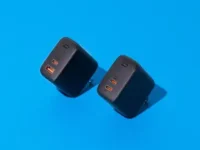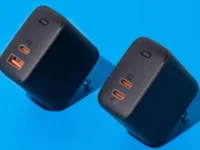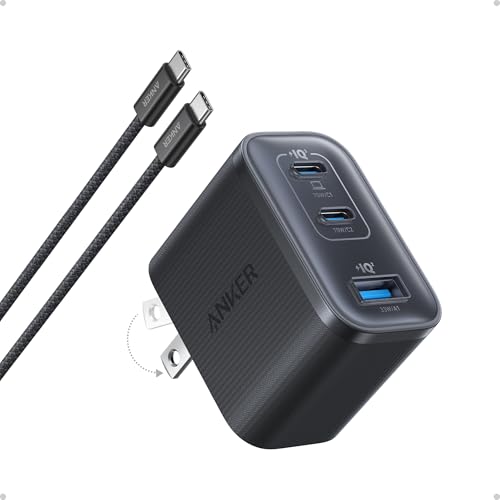
Written by Metin KARAL – Computer Engineer with 25+ years of experience in internet technologies. Some products here are tested directly, while others are evaluated through detailed research, specifications, and verified customer feedback. This article may contain affiliate links; as an Amazon Associate we earn from qualifying purchases at no extra cost to you.
The compact 3-port GaN charger category has gotten crowded fast, and the Anker Nano 70W Max is one of the more interesting entries — it squeezes a genuine 70W single-port output into a shell Anker says is 41% smaller than a standard 70W charger, backs it with TÜV Rheinland certification and Anker’s ActiveShield 4.0 thermal monitoring, and ships with a USB-C cable already in the box. On paper, that’s a strong combination for anyone charging a MacBook, phone, and tablet from the same travel-friendly brick.
It’s not the only option in this exact niche, though. The UGREEN Nexode 65W and the Belkin 67W Dual-Port both compete directly for the same “compact multi-device GaN charger” shelf space, at different price points and with different trade-offs. This review covers what the Anker actually gets right, where the spec sheet needs a closer read than the headline number suggests, and how it stacks up against those two alternatives.
Quick Facts
- ⚡ Max output: 70W from a single USB-C port when used alone; total output drops when multiple ports are active at once (see Things Buyers Should Know below)
- 🔌 Ports: 2x USB-C + 1x USB-A, three devices at once
- 📦 In the box: charger, a 4.9ft USB-C to USB-C cable, welcome guide
- 📐 Size: 2.09 × 1.68 × 1.24 in, roughly 4.23 oz — Anker states this is about 41% smaller than a standard 70W USB-C charger
- 🌡️ Thermal design: dual GaN chips plus ActiveShield 4.0 monitoring; Anker states surface temperatures run up to 50°F (10°C) cooler than international safety benchmarks
- 🛡️ Certification: TÜV Rheinland certified
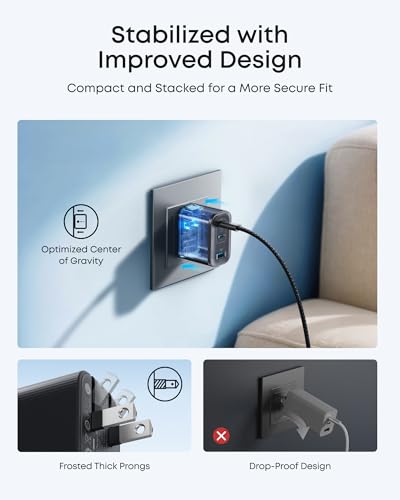
- 🔧 Design: foldable prongs, textured shell with a metal frame accent; available in black, blue, pink, and white
- 🛡️ Warranty: 18-month limited warranty
- 💵 Price: sits around $40, the priciest of the three chargers covered in this review
- ⭐ Amazon feedback: a strong overall rating from a solidly established review base, well over 1,500 ratings
Editor’s Note
The headline “70W” figure is accurate, but it’s worth reading Anker’s own spec table closely before assuming it applies to every charging scenario. That 70W maximum is a single-port number — it’s what USB-C1 delivers when it’s the only port in use. The moment a second or third device is plugged in, the charger’s own output table shows the total splitting down: two ports active together top out around 65W combined, and all three ports active together cap around 60W combined. That’s completely normal behavior for a shared power budget in a compact GaN charger, and it doesn’t make the “70W” claim false — but a buyer expecting 70W to every single device simultaneously would be disappointed, and that’s worth knowing before assuming this replaces three separate full-power chargers at once.
One nice, honestly underrated inclusion here: the charger ships with its own USB-C cable. That’s not a given in this category — as you’ll see in the comparisons below, neither of the two alternatives covered in this review includes one.
If you’re cross-shopping against UGREEN’s lineup specifically, it’s worth a heads-up: UGREEN’s “Nexode” name covers a genuinely large family of chargers — standard Nexode, Nexode Pro, Nexode X, Nexode Air, various port counts, and a retractable-cable variant — several of which share very similar product photography and titles. This review compares against the specific 3-port (2 USB-C + 1 USB-A), 65W GaN II model, not the Pro or X variants, so it’s worth double-checking the exact listing if you go looking for it.

Why Compact Multi-Port GaN Chargers Matter Right Now
A few years ago, getting 65-70W of laptop-capable charging out of a wall adapter meant carrying something close to the size of the original power brick that shipped with your laptop. Gallium Nitride (GaN) chip technology changed that math by allowing higher power output with far less generated heat than older silicon-based chargers, which is what let brands like Anker, UGREEN, and Belkin shrink genuinely capable multi-port chargers down to roughly the size of a large egg.
The other shift worth understanding is PPS (Programmable Power Supply), a protocol layered on top of standard USB Power Delivery that lets the charger and device negotiate more precise voltage/current combinations in real time. This is what allows a single charger like this one to fast-charge a Samsung Galaxy phone’s specific “Super Fast Charging” protocol and an iPhone’s slower Apple-specific fast-charge curve equally well, rather than forcing one brand’s phone into a generic, slower charging profile.
Pros
- Cable is included, not sold separately — a genuinely useful inclusion in a category where the other two chargers compared here both ship without one, meaning you’re not immediately shopping for a second accessory just to use it.
- Genuinely compact for a 70W-capable charger — at roughly the footprint Anker describes as 41% smaller than a standard 70W brick, it’s an easy charger to actually carry daily rather than leave at home.
- Real third-party safety certification — TÜV Rheinland certification is a recognized independent testing standard, which carries more weight than an uncertified competitor’s own internal safety claims.
- Three ports covers realistic daily-carry needs — phone, tablet, and a set of earbuds (or a laptop instead of the tablet) can all draw power from this one brick without needing a separate charger for each.
- Longer-than-typical warranty for the category — 18 months of coverage is a meaningful step up from the 12-month warranties common on cheaper third-party chargers.
Cons
- 70W is a single-port ceiling, not a combined total — charging three devices at once means sharing a smaller total power budget across all of them, which is worth understanding before assuming every port always hits its individually-listed maximum simultaneously.
- Only one USB-A port — fine for most modern setups, but anyone still relying on multiple older USB-A cables for wearables or accessories will find themselves needing an adapter or a second charger.
Things Buyers Should Know
“70W” is what one port gets alone — not what every port gets at once
This is the single most important spec nuance on this charger, and it’s genuinely common across the entire compact multi-port GaN category, not just Anker. Look at the manufacturer’s own output table rather than just the headline wattage: a single USB-C port alone can reach 70W, but plug in a second device and the two ports share a combined ceiling closer to 65W, split according to which ports are active. Add a third device and the combined ceiling drops again. For charging one device at a time — say, a laptop overnight — this is a non-issue. For charging a laptop and a phone simultaneously and expecting both to hit their individual maximums at the same time, it’s worth adjusting expectations.
Check which UGREEN Nexode you’re actually looking at
If you go looking for the UGREEN alternative discussed in this review, be aware that “Nexode” is UGREEN’s umbrella name for a wide range of charger models — including Pro and X variants with different chip generations, different port counts, and in one case a built-in retractable cable. They often share similar product photography, which makes it easy to click into a listing expecting one spec sheet and get a different one. The model compared here specifically is the standard 3-port (2 USB-C + 1 USB-A), 65W GaN II charger.
A cable in the box saves an extra purchase most buyers don’t expect to need
It’s easy to overlook when comparing chargers purely on wattage and port count, but a fast charger without a cable capable of actually carrying that wattage is only half a purchase. Confirm what’s actually included before assuming your existing cable will do the job at full speed — a cable rated for a lower wattage than the charger will bottleneck the whole setup regardless of how capable the brick itself is.
If you’re specifically shopping for a Galaxy S26 or iPhone charger, dedicated roundups exist
This review focuses on the Anker Nano 70W Max as a general-purpose multi-device charger. If your priority is specifically the best charger for a Samsung Galaxy S26-series phone, our 7 Best Samsung S26 Ultra Charger Review covers official and third-party options built around that phone’s exact fast-charging protocol. If you’re shopping specifically for an iPhone, our 7 Best iPhone Chargers in 2026 roundup narrows the field to picks tuned for Apple’s charging curve.

Real-World Charging Speed & Port-Sharing Behavior
For a single device, this charger’s behavior is exactly what the headline spec promises: a 14-inch MacBook Pro (2024) can reportedly go from 0 to 50% in around 35 minutes on the full 70W path, and a compatible phone or tablet plugged in alone will pull whatever its own fast-charging protocol allows, up to that same 70W ceiling on the same port.
Where it’s worth setting expectations is multi-device use. Plug in a laptop and a phone together, and the charger’s own output table shows the combined ceiling settling around 65W split between them (for example, roughly 45W to one port and 22.5W to the other) rather than each device getting its individually-rated maximum simultaneously. Add a third device on the USB-A port and the total ceiling narrows further. None of this is unusual for a charger in this compact GaN category — it’s simply the physical reality of a shared internal power budget — but it’s the difference between “genuinely useful multi-device charger” and “three independent full-power chargers in one shell,” and the former is the more accurate way to think about it.
Size, Build & Thermal Design
The compact footprint is genuinely one of this charger’s strongest selling points — at roughly the size Anker describes as 41% smaller than a standard 70W charger, it’s an easy addition to a bag without meaningfully adding bulk, and the foldable prongs mean it won’t catch on other items in transit. The textured shell with a metal-frame accent reads as more premium than the plain plastic bricks common at this price point, and the color options (beyond the standard black or white most competitors offer) are a small but genuine point of differentiation for anyone building a matching desk or travel setup.
On the thermal side, TÜV Rheinland certification means the safety and thermal claims here went through independent testing rather than resting purely on the manufacturer’s own word — a meaningfully higher bar than an uncertified competitor making similar “runs cooler” claims with no named testing body behind them.

How it Compare ?
Anker Nano 70W Max vs UGREEN Nexode 65W
The UGREEN Nexode 65W is the more budget-focused alternative here, undercutting the Anker meaningfully on price while offering the same 2 USB-C + 1 USB-A, three-port layout and a comparably compact, foldable-plug design built around UGREEN’s own GaN II chip. It also carries a far larger review base than the Anker Nano, for buyers who weigh a longer market track record heavily.
Where the Anker pulls ahead is the accessory bundle and the extra 5W of single-port headroom: the UGREEN ships as charger-only, with no cable and no stated third-party thermal certification in its own listing copy, while the Anker includes both a cable and TÜV Rheinland backing. If price is the deciding factor and you already own a suitable USB-C cable, the UGREEN is hard to beat for the money. If you’d rather not think about buying a separate cable, or want an independently certified thermal claim rather than just a manufacturer’s own description, the Anker’s higher price buys you both.
Anker Nano 70W Max vs Belkin 67W Dual-Port
The Belkin 67W Dual-Port takes a different approach entirely: two USB-C ports only, no USB-A, positioned around Belkin’s SmartProtect safety system and a genuinely strong sustainability angle — recycled materials, plastic-free packaging, plus a 2-year warranty backed by a $2,500 Connected Equipment Warranty that’s more generous than either the Anker or UGREEN offer.
One thing worth flagging honestly: Belkin’s own listing bundles several different variants — different wattages and colors — under what looks like a single product page, so it’s worth double-checking that the specific “67W Black” configuration is the one in your cart before buying, rather than a differently-specced style option. The Belkin also has a considerably smaller review base than either the Anker or the UGREEN, consistent with it being a newer listing without the same volume of long-term ownership feedback yet.
If a longer warranty and a sustainability-focused build matter more to you than raw port count, and you don’t need the USB-A port, the Belkin is a reasonable pick. If you want three ports and a cable in the box, the Anker remains the more complete package of the two.

Who Should Buy the Anker Nano 70W Max?
This charger makes the most sense for buyers who:
- Want a single charger for a laptop, phone, and a third accessory — the 3-port layout covers a realistic daily-carry set of devices without needing a separate brick for each.
- Travel frequently and value the compact size and foldable prongs enough to pay a premium over the cheaper UGREEN alternative.
- Don’t already own a suitable fast-charging USB-C cable and would rather buy a complete bundle than a charger-only box.
- Value independent safety certification over a manufacturer’s own unverified thermal claims.
Who should look elsewhere: if price is the main concern and you already own a compatible cable, the UGREEN Nexode 65W gets you a very similar port layout for meaningfully less money. If you only ever charge one or two USB-C devices and want the longest warranty of the three, the Belkin is worth a look instead — just confirm the exact wattage variant before buying.
Final Verdict
The Anker Nano 70W Max earns its higher price through completeness rather than raw specs alone. The 70W single-port ceiling is genuinely competitive, but so is UGREEN’s 65W — the real gap between them is what’s actually in the box and behind the safety claims. A bundled cable and independent TÜV Rheinland certification are the kind of details that don’t show up in a quick spec-sheet skim, but they’re exactly what separates “buy this and you’re done” from “buy this, then go find a cable and hope the thermal claims hold up.”
The one spec worth internalizing before buying any charger in this category, Anker included, is that headline wattage numbers are almost always single-port maximums. Read the manufacturer’s own multi-port output table before assuming three devices all charge at their individual best simultaneously.
If a complete, well-certified, genuinely pocketable 3-port charger is what you’re after and the price premium over UGREEN doesn’t bother you, the Anker Nano 70W Max is a well-rounded pick that doesn’t leave you shopping for a cable afterward
Anker Nano 70W Max Review
Summary
The Anker Nano 70W Max is the most complete pick of the three chargers compared in this review — TÜV Rheinland-certified 70W single-port output, ActiveShield 4.0 thermal monitoring, a compact shell 41% smaller than a standard 70W charger, and an included 4.9ft USB-C cable backed by an 18-month warranty. A higher price than the UGREEN alternative and a shared, not per-port, power budget once multiple devices are plugged in are the honest trade-offs — common to this entire charger category, not unique to Anker. For buyers who want a complete, certified, pocketable charger without an extra cable purchase — start here.
Frequently Asked Questions
Does the 70W rating mean all three ports can output that much power at the same time in Anker Nano 70W?
No, and this is the one spec worth understanding before you buy any compact multi-port charger, not just this one. The 70W figure is a single-port maximum — it’s what one USB-C port delivers when it’s the only thing plugged in. The moment you add a second device, the charger’s internal power budget splits between the active ports, and the combined total settles closer to 65W rather than each port independently hitting 70W. Add a third device on the USB-A port and the combined ceiling narrows again. This isn’t a flaw specific to the Anker Nano — it’s standard behavior for practically every compact GaN charger on the market, because the internal circuitry has to share one finite power supply across however many ports are drawing from it. If you’re usually charging one device at a time, like a laptop overnight, this never comes into play. It only matters if you’re expecting three devices to each pull their individually-listed maximum simultaneously.
Will Anker Nano 70W actually fast-charge my Samsung Galaxy and my iPhone equally well?
Yes, and the reason comes down to a charging protocol called PPS (Programmable Power Supply), which sits on top of standard USB Power Delivery. PPS lets the charger and the connected device negotiate a much more precise voltage and current combination in real time, rather than locking into one fixed profile. That’s what allows a single charger to correctly recognize and fast-charge a Samsung Galaxy phone’s “Super Fast Charging” protocol on one port and an iPhone’s own Apple-specific fast-charge curve on another, without either device getting throttled down to some generic lowest-common-denominator speed. Both ecosystems get their own proper fast-charging behavior from the same charger, which wasn’t reliably true of older, non-PPS chargers.
Is a 4.9ft cable actually a meaningful advantage, or just a nice-to-have in Anker Nano?
It’s more meaningful than it sounds, mainly because a fast charger is only as fast as the cable attached to it. A charger rated for 70W plugged into a cable rated for a lower wattage will bottleneck the entire connection regardless of how capable the brick itself is — you’d never actually see the speed the charger is capable of. The bigger practical issue, though, is that not every charger in this category includes a cable at all; several competing 65-70W GaN chargers, including the UGREEN alternative covered in this review, ship as charger-only, which means budgeting for a separately-purchased, properly-rated cable just to use the thing you bought. Getting a cable that’s actually matched to the charger’s output, included in the box, removes that entire extra step.
What does TÜV Rheinland certification actually verify, and why does it matter here?
TÜV Rheinland is an independent, third-party testing organization, and its certification means a charger’s safety and thermal claims were verified by an outside lab rather than resting purely on the manufacturer’s own internal testing and marketing copy. That distinction matters more than it might seem, because “runs cooler,” “meets safety standards,” and similar phrases are extremely common in charger marketing, and without a named, independent certifying body behind them, there’s no real way to verify whether they hold up. A charger carrying genuine TÜV Rheinland certification has cleared a bar that an uncertified competitor making similar claims simply hasn’t been tested against, which is a meaningful, verifiable point of difference rather than just marketing language.
Is it worth paying more for this over a cheaper GaN charger with similar wattage?
That depends entirely on what you’re actually buying it for. If all you need is raw wattage and port count, a cheaper alternative can get you there for less money — the UGREEN Nexode 65W covered elsewhere in this review is a good example, offering a nearly identical 3-port layout at a meaningfully lower price. Where the extra cost buys something real is in the parts of the purchase that are easy to overlook on a spec sheet: an included, properly-rated cable so you’re not making a second purchase, and independent safety certification instead of taking a manufacturer’s word for it. If either of those already exists in your setup or doesn’t matter to you, the cheaper option is a perfectly reasonable choice. If you’d rather the charger be the last thing you buy for this particular need, the more complete package is worth the premium.
Written by Metin Karal
Metin Karal is a Computer Engineer with over 25 years of experience working with internet technologies, trends, and digital tools since 1995. He brings this deep background into his product reviews, combining technical expertise with careful research to deliver honest, practical insights for readers. Passionate about technology, Metin also enjoys programming in C# and is currently developing PairMem, a challenging memory game available for free on the official Microsoft Store.
How We Selected These Products
We recommend these items based on a thorough research process designed to highlight the best options available. While we did not physically test some products ourselves, we relied on detailed research and verified customer feedback to evaluate them.
- Detailed Research: We reviewed product specifications, manufacturer information, and feature lists to understand what each item offers.
- Customer Insights: We analyzed verified buyer reviews and ratings to learn how these products perform in real-world use.
- Comparison Factors: We compared products across price, durability, usability, and unique features to identify the strongest choices.
- Personal Experience: With over 25 years of working in internet-related technologies and following online trends since 1995, I bring a deep understanding of how products are marketed, evaluated, and used. This background helps me filter out hype and focus on what truly matters for everyday users.
- Balanced Evaluation: Our goal is to provide clear, unbiased information so you can make confident purchasing decisions.
See also How We Review Products section for more details on our process.