
Written by Metin KARAL – Computer Engineer with 25+ years of experience in internet technologies. Some products here are tested directly, while others are evaluated through detailed research, specifications, and verified customer feedback. This article may contain affiliate links; as an Amazon Associate we earn from qualifying purchases at no extra cost to you.
A watch is one of the few things you buy expecting to wear every day for the next decade. That’s worth understanding properly before you spend the money. This guide exists to give you a complete, honest foundation — the kind of knowledge that lets you evaluate any watch, from any brand, at any price, without relying on someone else’s opinion. We cover movement types and what they mean in practice, crystal quality and how to spot marketing spin, water resistance and why the numbers lie, and much more as the guide grows. No lists of “top picks.” No affiliate rankings. Just the information that makes every other watch article make more sense.
Section 1 – Watch Movements Explained: Quartz, Automatic & Manual
The movement — sometimes called the caliber — is the engine inside your watch. It’s the complete mechanism responsible for tracking time and powering every function on the dial. When watch people talk about a movement, they mean everything inside the case: the gears, springs, jewels, and electronic or mechanical parts that make the hands move.
Understanding movements matters because your choice directly affects accuracy, price, maintenance costs, and how long the watch runs without attention. A $200 quartz and a $200 automatic are fundamentally different objects, even if they look identical from the outside. There are three types you’ll encounter at every price level.
Quartz movements
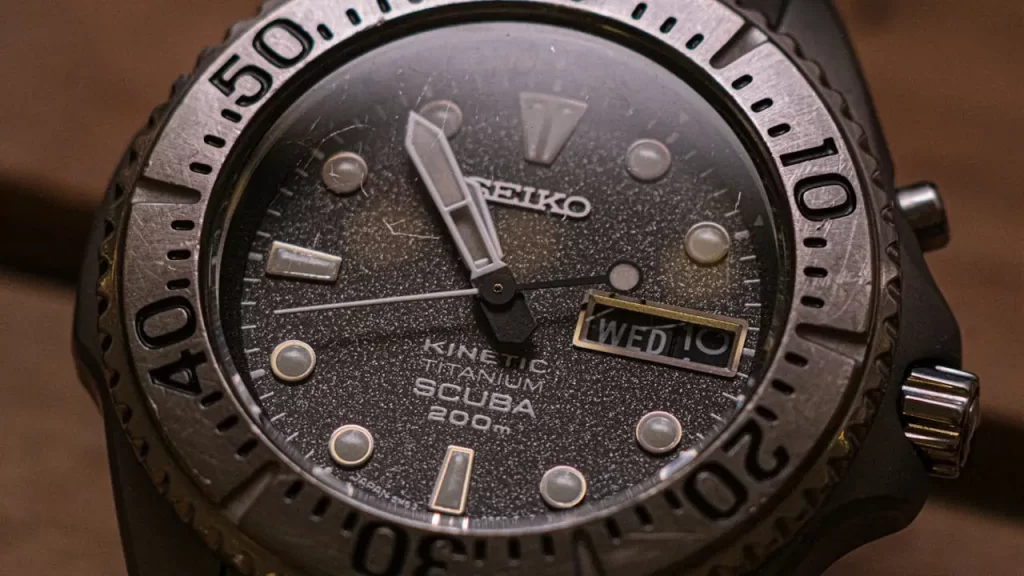
A quartz movement runs on a battery. When electricity passes through a tiny piece of quartz crystal, the crystal vibrates at an extremely precise frequency — exactly 32,768 times per second. An integrated circuit counts those vibrations, and once it reaches 32,768, it sends a signal to advance the second hand by one tick. That’s why a quartz watch ticks once per second in that distinctive, sharp way.
This mechanism was first commercialized by Seiko in 1969 with the Astron, and it effectively revolutionized the industry overnight. Suddenly, a $20 watch could keep better time than a $2,000 mechanical one. The so-called “Quartz Crisis” of the 1970s wiped out thousands of Swiss watchmakers who couldn’t compete.
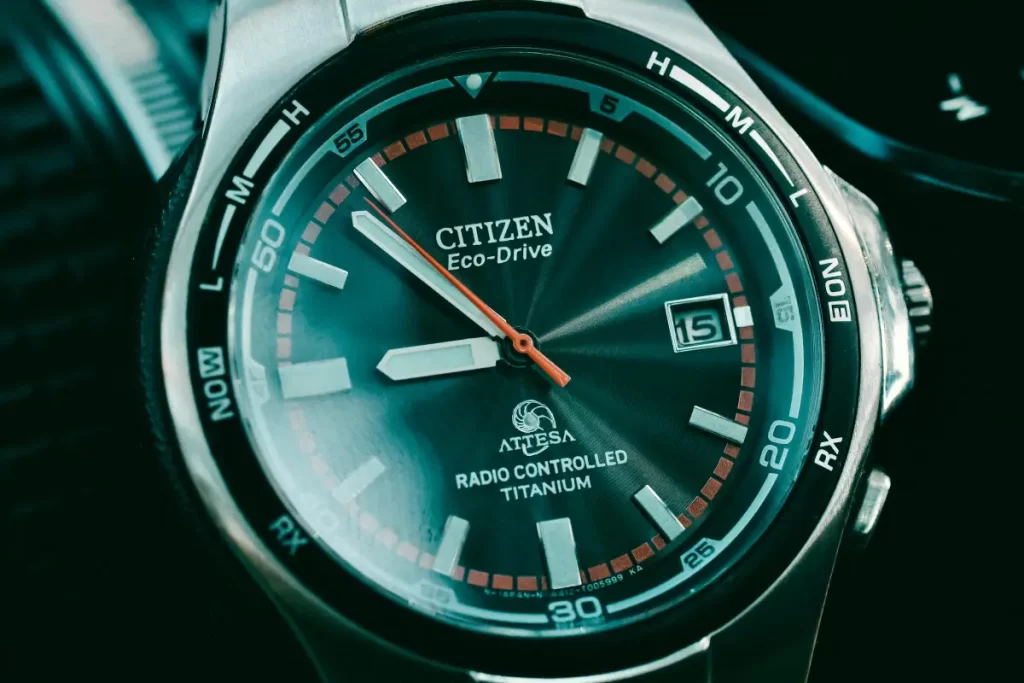
Today, quartz is used in everything from throwaway fashion watches to high-end pieces from Grand Seiko and Longines. Better quartz movements use temperature-compensated oscillators (called “TCXO” movements) that stay accurate even as temperature changes, achieving accuracy within ±10 seconds per year or better — far tighter than any mechanical movement.
Pros
- Most accurate movement available — typically ±15 seconds per year, far better than any mechanical watch
- Extremely low maintenance — just a battery swap every 2–3 years, usually $5–15 at any watch shop
- Always ready to wear — runs fine sitting on a shelf for months, no winding or resetting needed
- Usually thinner and lighter than mechanical watches at the same price point
- Better value for money at every tier — the savings on movement cost go into finishing, crystal, and case quality
Cons
- No mechanical craft appeal — it’s a circuit board, not a hand-assembled movement with 200 moving parts
- Battery will die and need replacing every 2–3 years — minor but recurring cost and effort
- Holds resale value worse than comparable mechanical watches
- Single-second tick feels less “alive” to some wearers — no smooth sweeping hand
Automatic movements
An automatic movement is a mechanical movement — meaning it runs entirely on physical energy stored in a coiled spring called the mainspring, with no battery ever needed. What makes an automatic different from a manual is a small weighted piece called a rotor. As your wrist moves throughout the day, the rotor spins freely and winds the mainspring automatically.
A well-made automatic has 100–300 moving parts, all machined and assembled to tolerances measured in microns. Looking through a display caseback at a finishing automatic movement is genuinely impressive in a way a circuit board simply isn’t. This is a big part of why people choose mechanical over quartz — it’s not about accuracy, it’s about owning something extraordinary.
Automatic movements have a power reserve — typically 38–72 hours depending on the caliber. If you leave the watch unworn for 3 days, it will stop. This is normal — just wind the crown manually 20–30 times and reset the time. If you own multiple automatics, a watch winder (a motorized case that keeps watches moving when not worn) is worth considering.
Accuracy on a modern automatic is typically ±5–25 seconds per day. That might sound poor compared to quartz, but in practice you glance at your phone once a week and adjust a few seconds. Movements certified by COSC (the Swiss Official Chronometer Testing Institute) must achieve ±4 seconds per day or better — you’ll see “Chronometer” printed on the dial of watches carrying this designation.
For hands-on recommendations across every budget, our best automatic watches for men roundup puts the theory into practice — ten picks from under $100 to affordable luxury with full specs and honest trade-offs.
Pros
- No battery, ever — self-winding from wrist movement, runs indefinitely with normal wear
- Genuine mechanical craftsmanship — 100–300 hand-assembled moving parts, a wearable piece of engineering
- Holds and grows resale value far better than quartz equivalents
- Smooth sweeping second hand — typically 6–8 ticks per second, looks and feels more premium
- Can last generations with periodic servicing — these watches are genuinely inheritable
Cons
- Less accurate than quartz — expect to adjust by a few seconds each week
- Requires servicing every 5–7 years — typically $100–500+ depending on the brand and movement
- Will stop after ~2–3 days if not worn — needs restarting and time resetting
- Thicker case profile than quartz at the same price, due to movement size
- More expensive for comparable finishing — movement cost eats into the build quality budget
Manual (hand-wound) movements
A manual movement is mechanically identical to an automatic, with one key difference: there is no rotor. The mainspring only winds when you turn the crown yourself, typically once every one to two days. This is the oldest type of watch movement — all early mechanical watches were hand-wound before the rotor was invented.
Without a rotor, the movement can be made significantly thinner — which is why the world’s thinnest watches are almost always hand-wound. Patek Philippe’s ultra-thin dress watches and Piaget’s record-breaking pieces use hand-wound movements for exactly this reason. Many enthusiasts genuinely enjoy the daily winding ritual. Others find it annoying. Your preference matters here.
A note on “mechanical” as a marketing term: Watch listings often say “mechanical movement” without specifying automatic or manual. Both are mechanical. If the listing doesn’t say “hand-wound” or “manual wind,” it’s almost certainly automatic. When in doubt, check whether a rotor is visible through the caseback.
What this means when you’re buying
At the $150–300 range, quartz gives you more watch for the money — better case finishing, better crystal, more robust construction — because the movement itself costs almost nothing to manufacture. If you want a watch you’ll wear occasionally, travel with, or throw on without thinking, quartz is the smarter practical choice.
If you want something that feels special — a connection to watchmaking history, something potentially inheritable — an automatic at $150–300 makes perfect sense. Seiko’s NH35 caliber (found in hundreds of Seiko watches under $200) is a workhorse movement that has been running reliably for decades. The Orient F6922 is another well-regarded option at this price.
One practical tip: check what movement a watch uses before buying, not just the brand name. “In-house” means the brand manufactures its own movement — which generally signals higher quality and better long-term parts availability. Seiko, Rolex, and Grand Seiko make their own. Many mid-range brands use movements from ETA or Sellita, which is perfectly fine — those Swiss manufacturers supply movements to hundreds of reputable brands.
Buyer’s Checklist — Movements
01 – Look up the specific caliber number before buying. Most brands list it in specs. Search “[caliber name] review” to find community feedback on reliability, serviceability, and real-world accuracy.
02 – Check service costs upfront. Seiko and Orient movements can often be serviced for $50–80 by independent watchmakers. Some Swiss movements cost $300+ at authorized service centers — worth knowing before you buy.
03 – If buying automatic, check the power reserve. 38 hours is the standard minimum. 70+ hours (common in Seiko’s 6R series) is more practical if you don’t wear the watch every single day.
04 – Don’t confuse “automatic” with “high quality.” A cheap automatic in a $60 no-name watch will likely be less reliable than a well-engineered quartz from Seiko or Citizen at the same price. Movement type alone says nothing about quality.
05 – For accuracy purists: look for Grand Seiko’s Spring Drive movement — a hybrid that uses a quartz oscillator to regulate a mechanical mainspring, achieving ±1 second per day. Starts around $2,500.
Section 2 – Watch Crystals: Sapphire, Mineral & Acrylic
The crystal is the transparent cover over the watch dial — the “window” you look through to read the time. It’s one of the most visible indicators of a watch’s quality tier, and it has a direct impact on how the watch looks after a year of daily wear. There are three materials used across the industry.
Sapphire Crystal
Sapphire crystal is synthetic aluminum oxide (Al₂O₃), grown in a lab. It is not gemstone sapphire, but shares its key property: extreme hardness — a 9 on the Mohs scale, where diamond is 10. The only common materials that can scratch it are diamond or silicon carbide. Your keys, coins, belt buckle, desk surface, and virtually every everyday object won’t leave a mark.
Sapphire is the standard crystal at $200+ and effectively universal above $500. After two years of daily wear, a sapphire crystal watch looks nearly identical to when you bought it. That’s not a small thing if you’re spending real money on a watch you expect to wear for a decade.
The trade-off is brittleness. Sapphire is hard but not flexible. A sharp impact — dropping the watch face-down onto concrete — can crack or shatter the crystal. This is repairable ($50–150 typically), but it’s a real weakness. Mineral glass, which scratches more easily, is actually better at absorbing impact without shattering.
Anti-reflective (AR) coating is applied to one or both inner surfaces on quality sapphire crystals. This dramatically reduces glare and makes the dial easier to read in bright light. If you’ve ever wondered why one watch dial looks “deeper” and more legible than another — it’s usually the AR coating, not the dial itself.
Pros
- Extremely scratch resistant — everyday objects like keys, coins, and belt buckles won’t mark it
- Looks new for years — after 2 years of daily wear, still near-flawless with normal use
- Industry standard at $200+ — its absence at this price tier is a genuine red flag
- Excellent clarity — especially with double-dome or AR coating applied
Cons
- Brittle under sharp impact — a hard corner knock can crack or shatter it
- Adds manufacturing cost — brands use mineral crystal to cut price at lower tiers
- Can produce strong glare without AR coating — worse than mineral in direct sunlight
Mineral Crystal
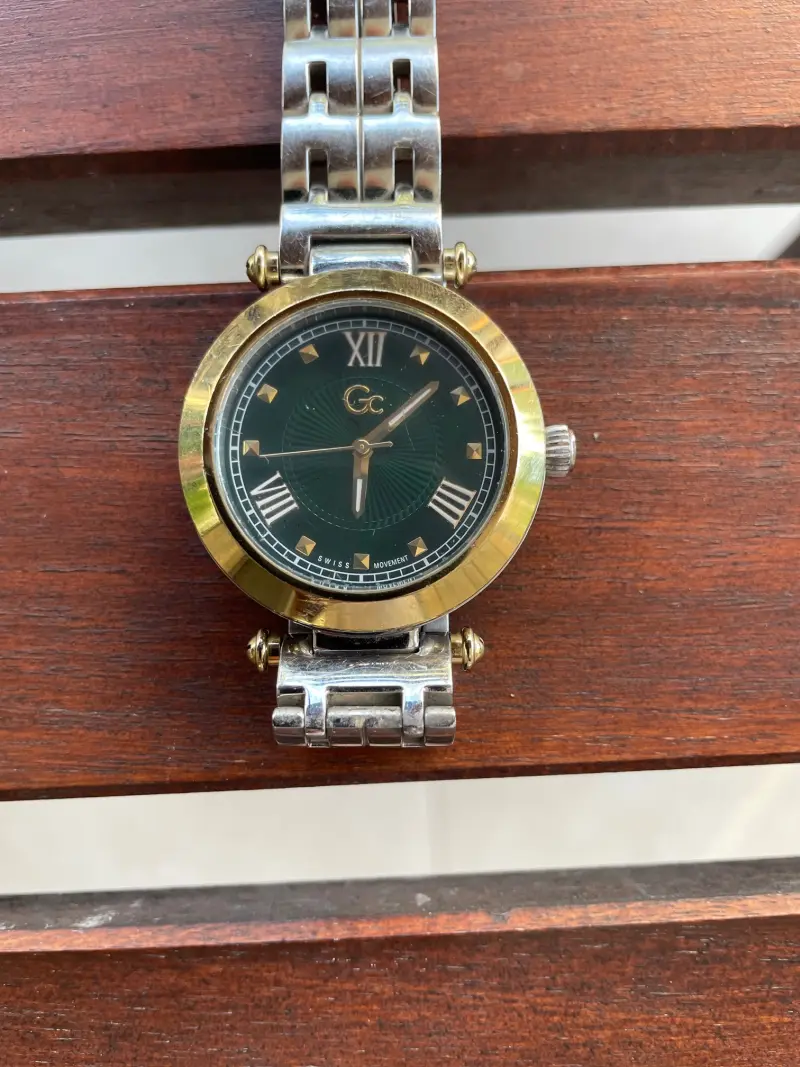
Mineral crystal is tempered glass, sitting around 5–6 on the Mohs scale. It will scratch from objects you encounter regularly — metal edges, rough surfaces, the inside of a bag. Fine scratches accumulate over time and give the crystal a hazy, worn look. It’s used on most watches under $150–200 because it costs significantly less than sapphire while still being far more durable than acrylic.
The realistic picture: after 12–18 months of active daily wear, you’ll probably notice light surface scratches under raking light. It won’t look terrible, but it won’t look new. Impact resistance is genuinely good — better than sapphire — making it reasonable for watches that take a beating.
Acrylic (hesalite) crystal
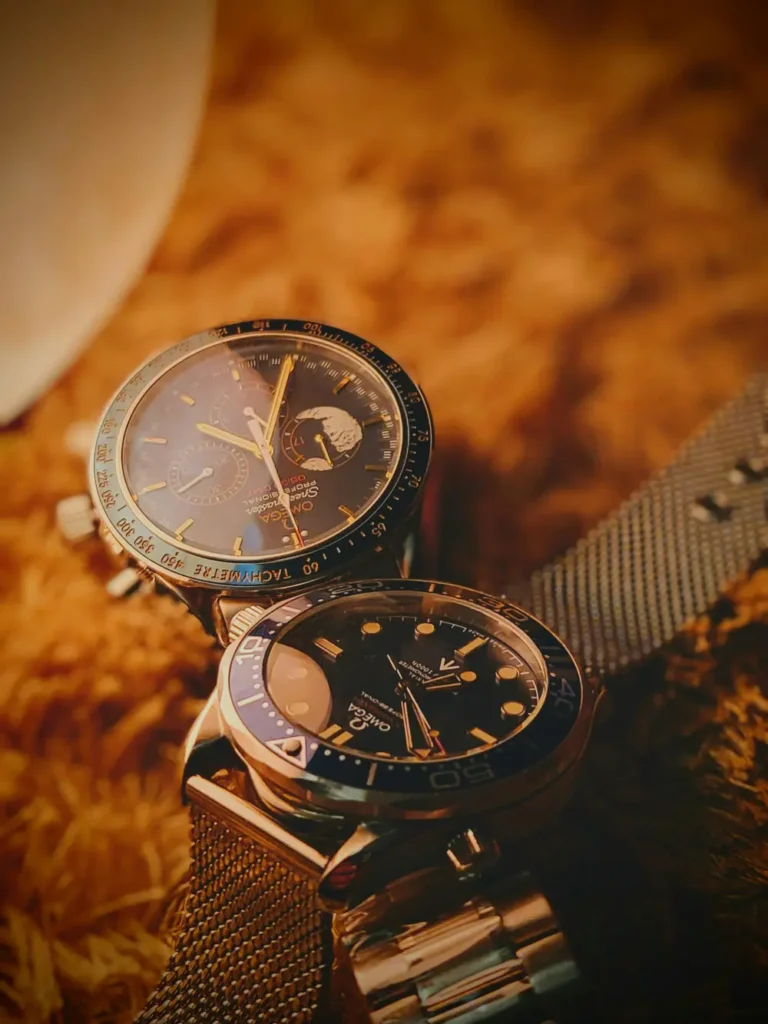
Acrylic crystal is essentially hard plastic — the oldest crystal material and universal before mineral and sapphire became affordable. Today it appears in budget watches, vintage pieces from the pre-1980s era, and deliberate retro designs. The famous example is the original Omega Speedmaster “Moonwatch”, which uses acrylic to this day — NASA required it because acrylic doesn’t shatter into sharp fragments in a pressurized environment.
The practical reality: acrylic scratches almost immediately. The redeeming quality is that it can be polished back to near-perfect clarity with a cloth and Polywatch or similar plastic polish. So while it scratches easily, the damage is reversible in a way deep mineral scratches are not.
Watch out for “sapphire-coated” mineral crystal. This marketing term appears frequently in the $100–200 range. It means a thin sapphire coating was applied to the surface of mineral glass. It provides marginally better scratch resistance than bare mineral, but it’s not remotely comparable to solid sapphire — the coating wears off and does nothing to change the structural brittleness of the underlying glass. At $150+, look for solid sapphire crystal, not coated mineral.
Crystal shape and AR coating — the details that matter
Beyond material, crystal shape affects aesthetics and legibility. A flat crystal is the simplest and most common. A domed crystal curves upward from the bezel — classic on dress and vintage-style watches. A double-domed crystal (curved on both outer and inner surfaces) is considered premium finishing and significantly reduces internal reflections.
You can often identify AR coating by tilting the watch under light and looking for a faint blue or green tint — that’s the coating’s interference layer. If a watch above $200 doesn’t specify AR coating, check real-world photos rather than studio shots — studio lighting hides glare problems that show up badly in sunlight.
Buyer’s Checklist — Crystals
01 – At $200+, expect solid sapphire crystal. If a watch at this price uses mineral, that’s a cost-cutting decision worth knowing about. Not a dealbreaker, but factor it in.
02 – Check for AR coating, not just sapphire. Uncoated sapphire can be harder to read in bright light than AR-coated mineral. “Sapphire crystal with anti-reflective coating” is meaningfully better than just “sapphire crystal.”
03 – Don’t confuse “sapphire-coated” with sapphire crystal. The word “sapphire” in the spec should refer to the entire crystal, not a surface treatment applied to mineral glass.
04 – For hard-use watches — diving, hiking, construction — mineral’s superior impact resistance is a legitimate advantage over sapphire. Some buyers deliberately choose mineral for their beater watches.
05 – If buying vintage, expect acrylic. Pre-1980s watches almost always have acrylic crystals. You can replace them with sapphire aftermarket, but many collectors prefer the original — it’s part of the watch’s correct look and character.
Section 3 – Water Resistance: What the Ratings Actually Mean
Water resistance is one of the most misunderstood and misrepresented specs in the entire watch industry. Most buyers assume that a watch labeled “30m water resistant” can be worn swimming — it can’t. And a watch rated “100m” isn’t necessarily safe for scuba diving. The numbers on the dial do not mean what you think they mean, and this gap between expectation and reality has ruined a lot of watches.
Understanding this spec properly takes five minutes and will save you from making an expensive mistake. It will also help you recognize when a watch is genuinely built for water use versus when a brand is using water resistance numbers as a marketing veneer.
How water resistance is measured — and why the numbers are misleading
Water resistance ratings are expressed in meters (m), atmospheres (ATM), or bar — and all three are used interchangeably in the industry. 1 ATM = 1 bar = approximately 10 meters of static water pressure. So a watch rated 3 ATM, 3 bar, and 30m are all the same thing.
The critical word is static. These ratings are tested in a laboratory using stationary water pressure — a watch submerged at rest in still water. Real life is nothing like that. When you move your arm through water, the dynamic pressure on the watch case multiplies dramatically. A casual freestyle swimming stroke generates roughly 3× the pressure of simply being submerged. A dive entry — jumping or diving into water — creates an impact pressure that can spike 10× or more.
This is why the industry ratings are conservative to the point of being misleading. A 30m rating does not mean “safe to 30 meters.” It means the watch passed a static lab test at that pressure. In real use, that watch should not go anywhere near water beyond a splash.
The units are all equivalent: 10m = 1 ATM = 1 bar. A watch marked “5 ATM,” “5 bar,” and “50m” all have identical water resistance. Brands use different units interchangeably — don’t let it confuse you.
What each rating actually means in practice?
Here is the honest, real-world translation of the ratings you’ll encounter. The “official” description and the practical reality are often very different.
| Rating | What brands say | What it actually means | Swimming? | Diving? |
|---|---|---|---|---|
| 30m / 3 ATM | Water resistant | Splash-proof only — rain, hand washing if brief. Do not submerge. | No | No |
| 50m / 5 ATM | Water resistant | Light splashes, brief rain. Still not safe for swimming laps or the pool. | No | No |
| 100m / 10 ATM | Suitable for swimming | Safe for swimming pools and ocean surface swimming. Not snorkeling or diving. | Yes | No |
| 200m / 20 ATM | Suitable for diving | Safe for recreational snorkeling and skin diving. Borderline for recreational scuba. | Yes | Borderline |
| 300m / 30 ATM | Diver’s watch | Safe for recreational scuba to standard depths (40m). This is the practical minimum for real diving. | Yes | Yes |
| ISO 6425 certified | Diver’s watch | Tested to a completely different, far stricter standard. The only rating that truly certifies a watch for diving. See below. | Yes | Yes |
ISO 6425 — the only diving standard that actually matters
If you want a watch for serious water use, the specification to look for is ISO 6425 certification — not a depth rating printed on the dial. ISO 6425 is an international standard that subjects a watch to a completely different battery of tests compared to a standard water resistance check.
To earn ISO 6425 certification, a watch must pass tests for anti-magnetic resistance, shock resistance, strap strength, legibility in the dark, condensation resistance, and more — in addition to the water pressure test, which is conducted at 125% of the rated depth. A watch rated 200m that is ISO 6425 certified has been tested to 250m under these conditions. The standard also requires a unidirectional bezel (a rotating ring used to track elapsed dive time) and that the watch remain legible at a distance of 25cm in total darkness.
Most watches that say “diver’s watch” on the dial or in marketing copy are not ISO 6425 certified. They have a high depth rating and diver-inspired aesthetics. Real ISO 6425-certified watches — like the Seiko SKX series, the Citizen Promaster, and the Orient Mako — are clearly labeled in the specs. If it doesn’t explicitly state ISO 6425 or “JIS B 7023” (the Japanese equivalent), it isn’t certified.
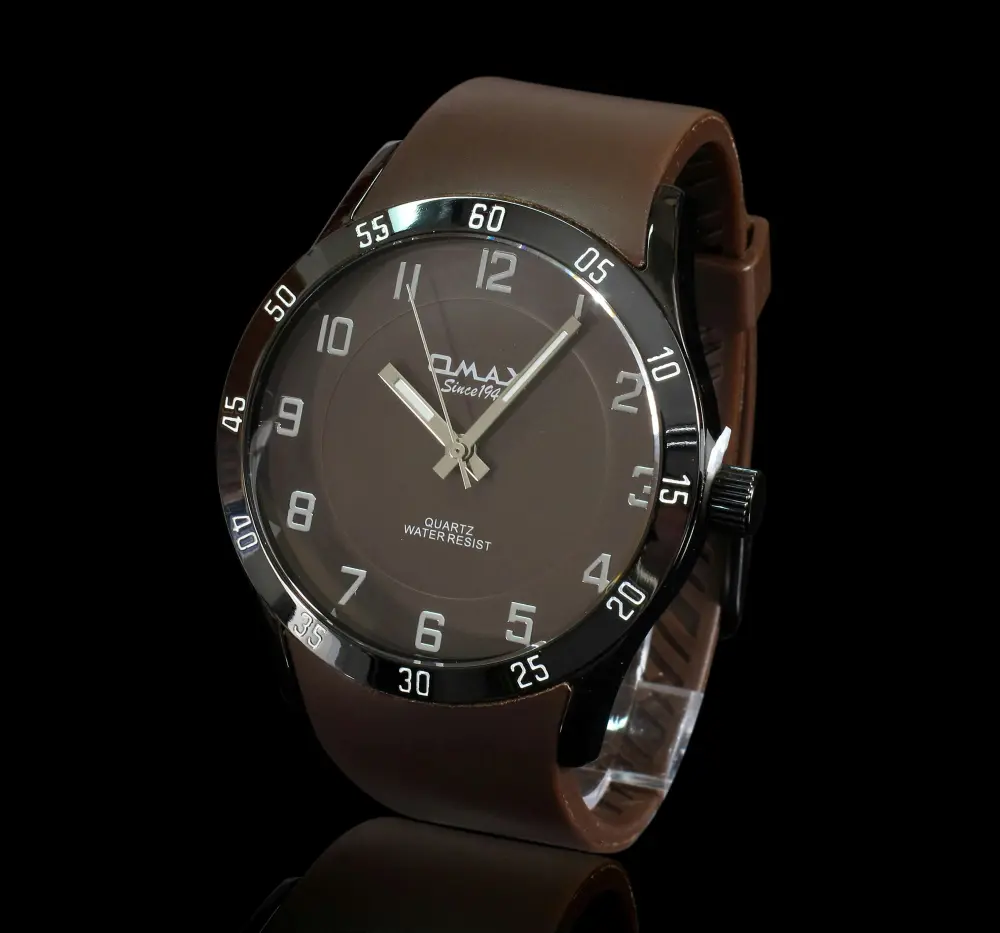
What degrades water resistance over time
Water resistance is not a permanent property. It degrades, and most watch owners don’t realize this until it’s too late. The water resistance of any watch depends almost entirely on the condition of its gaskets (seals) — rubber or synthetic O-rings fitted around the crown, caseback, and crystal. These gaskets compress over time, dry out, and crack. Heat, sunscreen, chlorine, and simple age all accelerate the process.
The industry recommendation is to have gaskets pressure-tested and replaced every 1–2 years if you regularly wear the watch in water. This is a minor service — usually $20–40 at a watch shop — but almost nobody does it. The consequence is that a watch rated 200m when it left the factory may be effectively 30m after three years of chlorinated pool use with no maintenance.
Two other common mistakes: operating the crown underwater (even one turn breaks the seal and lets water in instantly), and thermal shock — going from a hot shower to cold water, or sitting in a sauna and jumping in a pool. Rapid temperature changes cause the case metal and gaskets to expand and contract at different rates, briefly compromising the seal. Even a watch rated 200m should not be worn in a hot tub or sauna.
Practical rule of thumb: Take the stated depth rating and divide by three to get a conservative real-world safe depth. A 100m watch is safely usable to ~30m in practice. A 300m watch is safely usable for recreational scuba. This buffer accounts for dynamic pressure, gasket age, and the fact that lab tests don’t replicate real use.
What this means when you’re buying?
For everyday wear with occasional splashes and hand washing, anything 50m or above is fine — even most dress watches with a 30m rating will survive rain and a careless moment at the sink. The risk at 30m is more about peace of mind than a realistic expectation of failure.
If you swim regularly, don’t buy anything below 100m. This is a hard line. Even casual pool laps generate enough dynamic pressure to risk a 50m-rated watch over time.
If you dive, only consider ISO 6425-certified watches, regardless of the depth number printed on the dial. The Seiko SKX013, Orient Mako, and Citizen Promaster Diver are all certified, well-built, and available under $200. You don’t need to spend $500+ to get a genuinely dive-ready watch.
One final consideration: screw-down crowns. A watch with a screw-down crown — where you unscrew the crown before adjusting the time, then screw it back down — offers significantly better water resistance than a push-pull crown at the same depth rating. On any watch you plan to use in water, this is a feature worth specifically looking for. Most watches at 100m+ have them; if one doesn’t, treat its water resistance rating with skepticism.
Buyer’s checklist — water resistance
01 – 30m and 50m mean splash-proof, nothing more. Do not swim with these watches, regardless of what the marketing says.
02 – 100m is the minimum for swimming. For any regular pool or ocean use, this is your floor — not 50m, not “water resistant.”
03 – For diving, look for ISO 6425 certification explicitly in the specs — not just a high depth number or “diver’s watch” in the name.
04 – Check for a screw-down crown on any watch you plan to use in water. It’s a mechanical lock that makes the water resistance rating far more reliable in real use.
05 – Get gaskets checked every 1–2 years if you wear the watch in water regularly. A $30 service visit protects a $200+ watch from a failure that voids most warranties.
06 – Never operate the crown underwater, and avoid thermal shock — saunas, hot tubs, and rapid temperature changes degrade seals even on high-rated watches.
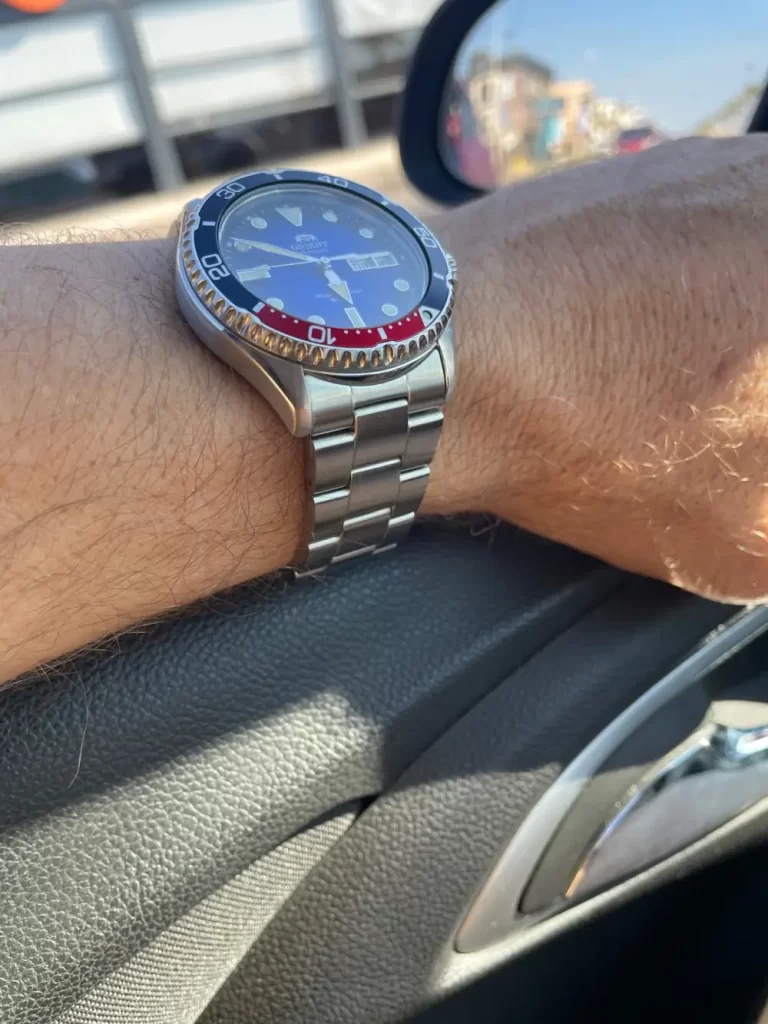
Case Size & Fit: What the Numbers Actually Mean
Most watch buyers focus on movement type or brand name and treat case dimensions as an afterthought. That’s backwards. A watch with the wrong case size for your wrist will look wrong regardless of how good the movement is — and a watch that fits well will always look intentional, even at a fraction of the price.
Here’s what every number on a spec sheet actually means, and how to use them before you buy.
What is case diameter in a watch?
Case diameter is the width of the watch face measured in millimetres, excluding the crown. It’s the number most buyers look at first — and the one that matters least on its own.
A 40mm watch on a 16cm wrist looks oversized. The same 40mm watch on a 19cm wrist looks understated. Case diameter tells you the size of the watch in isolation. It doesn’t tell you how it will sit on your wrist.
General starting points by wrist size:
| Wrist Circumference | Suggested Case Diameter |
|---|---|
| Under 16cm | 34–38mm |
| 16–18cm | 38–42mm |
| 18–20cm | 40–44mm |
| Over 20cm | 42mm+ |
These are starting points, not rules. Case thickness, lug-to-lug length, and bezel size all affect how a watch wears in practice.
What is lug-to-lug length and why does it matter more than case diameter?
Lug-to-lug is the distance from the tip of the top lugs to the tip of the bottom lugs — measured vertically across the watch. This is the number that actually determines wrist fit.
A watch with a 40mm diameter but 48mm lug-to-lug will hang over the edges of a 16cm wrist regardless of how the diameter looks. A 42mm watch with 46mm lug-to-lug will sit cleanly on the same wrist because the case is designed more compactly.
How to measure it: hold a ruler flat against the watch face from lug tip to lug tip. On your wrist, the lugs should sit within the wrist edges — not extend beyond them.
The Orient Mako III is a good example: 41.8mm diameter, 46.8mm lug-to-lug — a compact footprint for a diver that wears smaller than its diameter suggests.
What is case thickness and how does it affect wearability?
Case thickness is the height of the watch measured from the caseback to the top of the crystal. It determines whether the watch sits flush under a cuff or stacks above the wrist.
Under 10mm is considered dress-watch slim. 10–12mm is the everyday sweet spot. Over 13mm starts to create real cuff clearance issues on formal wear.
The Seiko SRPG35 is a useful reference: 40mm diameter, 13.2mm thick. It’s consistently the most complained-about spec in long-term owner reviews — not because the watch is bad, but because buyers didn’t check thickness before purchasing. A 40mm watch at 13.2mm will sit higher on the wrist than a 43mm diver at 12mm.
As a rule: lug-to-lug tells you whether the watch fits the wrist horizontally. Case thickness tells you whether it fits vertically — under a cuff, under a sleeve, and in terms of overall wrist presence.
What is lug width?
Lug width is the distance between the lugs where the strap or bracelet attaches, measured in millimetres. This is the number you need before buying any aftermarket strap.
Common lug widths: 18mm, 19mm, 20mm, 22mm. The most common for men’s watches is 20mm. The most common for women’s is 16–18mm.
Why it matters: a 20mm strap will not fit a 22mm lug. Strap swaps are one of the easiest ways to change a watch’s character — a field watch on a leather strap reads completely differently than the same watch on a NATO — but only if you buy the right width. Always check lug width before ordering aftermarket straps.
Drilled lugs (where the lug has a hole running through it) make strap changes tool-free. Solid lugs require a spring bar tool. Both work; drilled is more convenient.
What case diameter is considered too big?
There’s no universal answer, but the practical test is lug-to-lug overhang. If the lugs extend visibly beyond the wrist edge, the watch is too large for that wrist — regardless of what the diameter number says.
The fashion trend of the 2000s and early 2010s pushed case diameters up to 46–48mm as a default. That’s largely reversed. Most well-regarded daily wear watches now sit between 38–42mm, which suits a wider range of wrists and reads more considered than oversized.
For reference: the GC AquaSport X79004G2S is 45mm — a large, deliberate sport statement. The Orient Mako III is 41.8mm — comfortable on most average male wrists. The GC Flair Z02002L1MF is 28mm — a petite dress watch designed to wear like jewellery.
What watch size should I get for my wrist?
Measure your wrist circumference with a soft tape measure or a strip of paper. Then use lug-to-lug as your primary fit guide, not case diameter.
Practical steps:
- Measure wrist circumference in cm
- Use the diameter table above as a starting point
- Find the lug-to-lug spec for any watch you’re considering
- Check that lug-to-lug sits within your wrist width (roughly wrist circumference ÷ 3 gives an approximate wrist width)
- Check case thickness if cuff clearance is a concern
If you can try the watch on before buying, do. If you’re buying online, lug-to-lug is the single most useful number to check.
Does case material affect fit?
Not fit directly — but it affects weight, which changes how the watch feels on the wrist throughout the day.
Stainless steel is the standard: durable, heavier, holds its finish well. The GC AquaSport at 45mm stainless comes in at 400g including packaging — substantial on the wrist.
Titanium is roughly 40% lighter than stainless at the same case size — a meaningful difference for large-case sport watches worn all day.
Aluminium is lighter still but scratches more easily.
Resin/composite is used in field and sport watches where low weight matters more than premium finish.
For most buyers at the entry-to-mid price tier, stainless steel is the default and the right choice. Weight only becomes a deciding factor at larger case sizes (44mm+) or for buyers with wrist sensitivity.
What does case shape mean on a watch spec sheet?
Most watches are round. Some are square (like a Cartier Tank or a Bell & Ross BR-03), cushion-shaped, tonneau (barrel-shaped), or rectangular.
Shape affects how the lug-to-lug measurement translates to wrist fit. A round 40mm watch and a square 40mm watch have the same diameter, but the square case will have a larger lug-to-lug footprint because of how the corners sit on the wrist.
For buying purposes: if the spec sheet says round, lug-to-lug is your reliable guide. For non-round cases, try before you buy if possible, or look for wrist shot photos from owners with a similar wrist size.
Quick Reference: Case Fit Checklist Before You Buy
□ Case diameter — use as a starting point only
□ Lug-to-lug — the most important fit number; check against your wrist width
□ Case thickness — check if cuff clearance matters to you (aim for under 12mm for dress use)
□ Lug width — essential if you plan to swap straps; 20mm is the most versatile
□ Case material — check weight if you’re buying 44mm+ or wearing all day
□ Drilled or solid lugs — drilled means tool-free strap changes
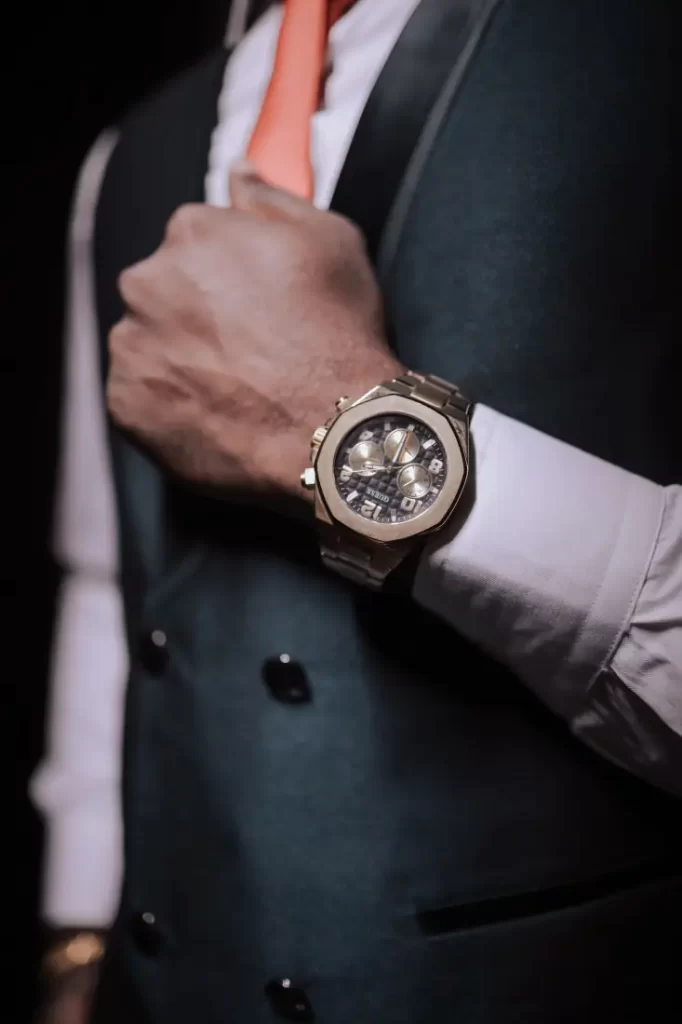
Strap & Bracelet Types: What Every Option Is and When to Choose It
The strap or bracelet a watch ships with is a starting point, not a permanent decision. Most watches with standard lug widths can be fitted with dozens of alternatives for under £20–£30 — and the right strap change can make a mid-range watch look significantly more considered, or a formal watch suddenly wearable on a weekend.
Here’s every common strap and bracelet type explained, with honest trade-offs for each.
What is a NATO strap?
A NATO strap is a single piece of nylon webbing that threads under the watch case and through both spring bars, with the tail end passing under the watch body and securing through two keeper rings.
Originally issued to British NATO forces in 1973 as a standardised watch strap — hence the name. The design means the watch stays on your wrist even if a spring bar fails, because the strap runs underneath the case rather than depending entirely on two attachment points.
Why people choose it: lightweight, inexpensive, easy to change, dries quickly after water exposure, comes in hundreds of colours and weave patterns. The Seiko SRPG35 ships on a beige nylon NATO-style strap — a correct choice for a field watch that reads as deliberate rather than cheap.
Trade-off: adds a small amount of case height because the strap layers underneath the watch. On a watch already over 12mm thick this can be noticeable. Also reads as casual — not suitable for formal occasions.
Best for: field watches, sport watches, everyday casual wear, warm climates, beach use.
What is a Zulu strap?
A Zulu strap is a thicker, heavier-duty version of the NATO — same single-piece threading concept, but built from thicker nylon or leather with larger, more robust hardware. Originally developed for military use where durability under hard conditions mattered more than aesthetics.
Difference from NATO: heavier hardware, thicker webbing, slightly more presence on the wrist. Functionally the same concept.
Best for: field watches and tool watches where durability is the priority over refined appearance.
What is a leather watch strap?
A leather strap attaches to the watch via two separate pieces — one for each lug — secured by spring bars. The tail end passes through a buckle on the shorter piece.
Leather is the traditional dress watch strap. A plain black or dark brown leather strap on a dress watch is as close to a universal formal choice as exists in watchmaking. It also transforms a sport or field watch: the Seiko SRPG35 on a dark leather strap reads entirely differently than the same watch on its stock nylon.
Trade-offs: leather doesn’t like water. Repeated moisture exposure — sweat, rain, swimming — degrades the material and causes cracking over time. Not suitable for dive watches or sport watches worn in water. Also needs occasional conditioning to stay supple.
Variants: full-grain leather (highest quality, ages well), genuine leather (lower grade, dries out faster), suede/Alcantara (soft texture, less formal, shows wear quickly), shell cordovan (premium, develops a patina over years).
Best for: dress watches, formal occasions, field watches in a casual-smart context, watches you want to look more expensive than they are.
What is a rubber or silicone strap?
A rubber or silicone strap is a one-piece flexible strap — two tails attaching via spring bars — designed for water resistance and comfort during sport or active use.
Silicone is the softer, more flexible variant. Rubber is denser and more durable. Both dry instantly, resist sweat and saltwater, and don’t degrade with repeated water exposure the way leather does.
Why it matters for dive watches: the GC AquaSport X79004G2S ships on a stainless bracelet, but for buyers who want to use it for actual diving, a rubber strap removes the risk of bracelet expansion in pressurised water and is more comfortable against a wetsuit.
Trade-offs: can feel warm and slightly sticky on the wrist in hot weather. Premium rubber straps (FKM, vulcanised rubber) are significantly more comfortable than basic silicone but also significantly more expensive.
Best for: dive watches, sport watches, swimming, hot climates, gym use, any context where water or sweat exposure is regular.
What is a mesh strap?
A mesh strap — also called a milanese strap — is made from interwoven stainless steel links forming a flexible, flat band with an adjustable slide clasp. It adjusts to exact wrist size without tools, which makes fit more precise than hole-punched straps.
Mesh reads as smart-casual. It bridges dress and sport in a way that neither leather nor NATO achieves — more refined than nylon, more relaxed than a formal bracelet.
Trade-offs: can snag arm hair on some wrists depending on the mesh tightness. The slide clasp, while convenient, is less secure than a deployment clasp for active sport use.
Best for: everyday wear where versatility matters, dress watches worn in casual settings, buyers who struggle with strap sizing.
What is a bracelet on a watch?
A watch bracelet is an integrated metal band — usually stainless steel — made from linked segments that attach directly to the lugs. Unlike straps, bracelets are designed as part of the watch rather than an interchangeable accessory.
Bracelets are assessed on three criteria: finishing (brushed vs polished), clasp type, and adjustment mechanism.
Finishing: a fully brushed bracelet suits tool watches and sport watches — the Orient Mako III uses a fully brushed stainless bracelet that holds its appearance under daily wear. Polished flanks look more formal but show micro-scratches faster. Mixed brushed/polished is common on mid-tier dress watches.
Adjustment: the best bracelets have micro-adjustment at the clasp — small increments of size change that let you dial in fit precisely. Budget bracelets adjust only by removing links, which requires a tool and can’t be reversed easily.
Trade-offs: bracelets are heavier than any strap option. At large case sizes (44mm+) a full stainless bracelet adds meaningful daily weight. They also require occasional link removal by a jeweller or with tools to fit the wrist correctly after purchase.
Best for: dive watches (the integrated look suits the brief), dress watches at the mid-tier and above, buyers who want a watch that looks complete without aftermarket customisation.
What is a deployment clasp?
A deployment clasp — also called a deployant clasp — is a folding metal clasp that replaces a standard buckle. Instead of a pin through a hole, it unfolds in two or three sections to open and closes with a click. Most use a push-button release.
Why it matters: a deployment clasp is more secure than a pin buckle for active use, reduces wear on the strap because you’re not repeatedly threading it through a buckle, and looks more refined on a dress or sport watch. The GC AquaSport X79004G2S and the GC Cable Chic Y58002L5MF both use deployment clasps — correctly specified for their respective use cases.
Variants: single-fold (one folding section), double-fold (two sections — more secure, common on dive watch bracelets), butterfly clasp (folds from both sides toward the centre — elegant on dress bracelets).
Trade-offs: more complex than a buckle; can feel fiddly until you’re familiar with the action. Some budget deployment clasps feel loose or rattle slightly.
Best for: dive watches, metal bracelets, any watch where security during active use matters.
What is a hidden clasp?
A hidden clasp is a deployment-style clasp designed to be invisible when the bracelet is worn. The folding mechanism sits underneath the bracelet and is flush with the links when closed, so the bracelet appears as a continuous band around the wrist.
The GC Flair Z02002L1MF uses a hidden clasp — the right choice for a dress bracelet where the aesthetic continuity of the band matters as much as function.
Trade-off: can be harder to locate by feel when opening, especially for first-time wearers.
Best for: dress bracelets and fashion watches where visual continuity is the priority.
What is a buckle clasp on a watch?
A buckle clasp is the simplest strap closure — a metal frame with a pin that passes through holes in the strap tail. Functionally identical to a belt buckle.
It’s the default on most leather, NATO, rubber, and nylon straps. Simple, reliable, easy to repair or replace if the hardware fails.
Trade-off: repeated use through the same hole wears the strap over time. Less secure than a deployment clasp for heavy sport use.
Best for: leather straps, casual strap options, entry-level watches where simplicity is the right choice.
What strap width do I need?
Strap width must match the watch’s lug width exactly. A 20mm strap on a 22mm lug will move laterally and look wrong. A 22mm strap will not fit a 20mm lug at all.
How to find your lug width: it’s listed in the spec sheet of any reviewed watch. If it isn’t, measure the gap between the lugs at the point where the strap attaches.
Taper: many quality straps taper from a wider lug end to a narrower buckle end — for example, 20mm at the lug tapering to 18mm at the buckle. This improves comfort and gives the watch a more refined silhouette. The first number is always the lug width; that’s the number that must match.
Can I change the strap on any watch?
Most watches with standard lug widths can be restrapped with basic tools — or no tools at all if the lugs are drilled. The spring bars (small metal rods that hold the strap in place) are removable with a spring bar tool available for a few pounds.
Exceptions: integrated bracelets — where the bracelet is part of the case design rather than attached via standard spring bars — cannot be swapped for standard straps. Some Rolex, AP, and Patek Philippe models use integrated designs. At the entry-to-mid price tier covered in this guide, virtually all watches use standard spring bar attachment and can be restrapped freely.
Quick Reference: Strap Type Cheat Sheet
□ NATO/Zulu nylon    — casual, durable, water-friendly, low cost, easy to change
□ Leather            — dress and smart-casual, looks premium, avoid water
□ Rubber/Silicone    — sport and diving, water-resistant, warm in heat
□ Mesh/Milanese      — smart-casual, precise fit, bridges dress and sport
□ Metal bracelet     — integrated look, heavier, suits divers and dress watches
□ Deployment clasp  — more secure than buckle, correct for sport and dress bracelets
□ Hidden clasp       — dress bracelets, aesthetic continuity, flush when worn
□ Buckle clasp       — simple, reliable, default on most straps
Written by Metin Karal
Metin Karal is a Computer Engineer with over 25 years of experience working with internet technologies, trends, and digital tools since 1995. He brings this deep background into his product reviews, combining technical expertise with careful research to deliver honest, practical insights for readers. Passionate about technology, Metin also enjoys programming in C# and is currently developing PairMem, a challenging memory game available for free on the official Microsoft Store.
Pingback: Best Men's Watches Under $300 (2026) - Expert Picks
Pingback: 5 Best Women’s Watches Under $200 - Affordable Luxury Style
Pingback: 10 Best Men’s Watches Under $100 (2026) – Expert Picks
Pingback: 5 Best Left‑Handed (Destro) Watches for Men in 2026
Pingback: 8 Best Seiko Watches for Men (2026) — Ranked by Value & Movement
Pingback: Orient Bambino Open Heart Review (2026) - The Dress Watch That Shows Its Work
Pingback: Citizen Eco-Drive Weekender Avion Review — The Solar Field Watch That Never Needs a Battery (2026)